Every Rider Knows the Feeling
We roll onto the throttle, the engine climbs through the rev range, and everything suddenly feels right.
The machine is alive.
Smooth.
Responsive.
Perfectly tuned for the terrain beneath you.
Something similar is happening inside your helmet.
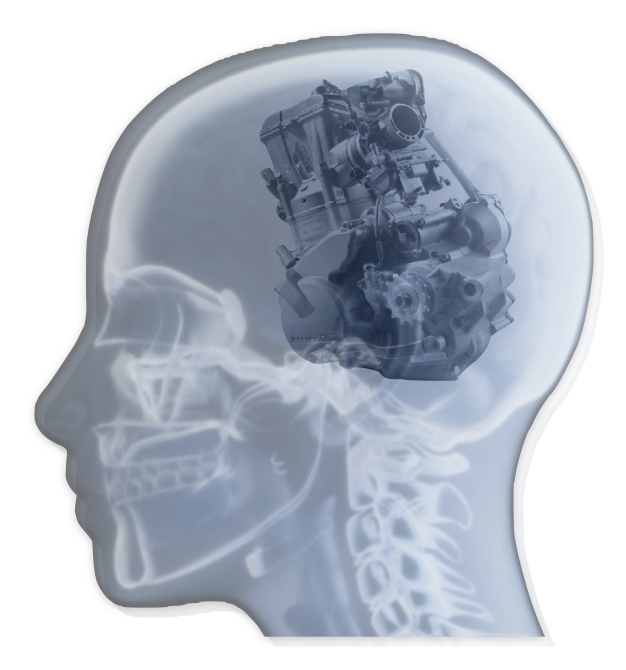
Because your brain is also running an engine.
The Brain Has an Engine Too
Just like a motorcycle engine, the brain operates across a rev range of activation.
Too little activation and the system struggles to move.
Too much activation and the system overheats.
But in the middle zone, something remarkable happens.
Our engine runs clean.
Power is smooth.
Response is immediate.
For the brain, this middle zone is where focus, clarity, and engagement live.
The Intensity Curve
Every human nervous system operates along an Intensity Curve.
Low Intensity Zone - Disengagement Intensity:
Low Engagement
Passive / Disengaged Mindset
High-Friction or Unavailable Focus
Low Motivation / Boredom State
Optimal Intensity Zone - Engagement Intensity:
Full Engagement
Open / Growth Mindset
Low-Friction Focus
Flow state
High Intensity Zone - Stress Intensity
Overloaded Engagment
Fight-or-Flight Fear-Based Mindset
Narrow / High-Friction Survival Focus
Eventual Crash State
The goal is not to avoid intensity.
The goal is to operate in our unique optimal engagement intensity zone — our optimal intensity rev range.
Adventure riders experience this zone frequently.
Technical terrain.
High speeds.
Rapid decision making.
Constant feedback from the environment.
These conditions naturally push the brain into the engagement intensity zone.
Attention sharpens.
Distractions disappear.
Time seems to change.
Many riders describe this as feeling most alive.
When the Engine Runs Too Hot
There is another side to the Intensity Curve.
When activation rises beyond the engagement intensity zone, the nervous system shifts into the stress intensity zone.
The limbic system takes over.
This is our fight-or-flight response.
The brain begins preparing for danger.
Short bursts of this can be useful.
But if we stay there too long, the system begins to break down.
Too much friction.
Too much heat.
In biological terms, this means rising levels of cortisol and adrenaline.
Energy drops.
Focus collapses.
Burnout follows.
Why Normal Life Can Feel Flat
Many riders spend hours operating in the engagement zone during intense rides.
When they return to normal life, stimulation drops sharply.
The brain falls back toward idle.
The contrast can feel dramatic.
Work tasks that once felt manageable suddenly feel dull or heavy.
It is not laziness.
It is simply how the brain responds to changes in stimulation.
The Ride-to-Idle Transition
After a long ride operating in the engagement intensity zone, the nervous system is still running at elevated RPM.
When the ride ends and we suddenly return to everyday life, the brain experiences a rapid drop in stimulation.
This is the moment many riders describe as “the drop.”
The contrast can feel dramatic.
But the brain, like a motorcycle engine, doesn’t always transition smoothly when it is forced to jump too quickly across the rev range.
Every rider understands what would happen if you were riding at 80 mph in 6th gear and suddenly slammed the transmission straight
down into 1st.
The engine would instantly redline and likely destroy itself.
Instead, we downshift gradually.
We step down through the gears.
We allow the engine to slow within its natural rev range until it settles comfortably back at idle.
The brain works in a similar way.
When we learn how to downshift our nervous system gradually, the transition from high engagement back to everyday life becomes much smoother.
Understanding this process - and learning how to consciously downshift the nervous system - is one of the keys to learning how to tune the engine in our helmets, a skill we teach through Ride to Rise coaching.
Learning to Tune the Engine
Just like a motorcycle engine, the brain performs best when it is properly tuned.
Understanding your personal Intensity Curve allows you to operate closer to your engagement intensity zone more often.
That might involve:
movement
challenge
curiosity
purpose
When those elements are present, the engine runs clean.
Focus becomes natural.
Energy stabilizes.
And high performance becomes sustainable.
Where This Leads
For some people, understanding their unique intensity curve leads to an even deeper discovery.
They realize their brain may regulate stimulation differently than most people.
In some cases, this difference is connected to ADHD.
In other cases, it simply reflects how their nervous system responds to challenge and intensity.
Understanding your personal Intensity Curve - and learning where your optimal engagement zone lives - allows you to stay in your sweet spot more often.
The place where the engine runs clean.
The place where focus is natural.
The place where performance and well-being can exist together.
Understanding how your system works can change everything.
GJ Silver — Founder, Ride to Rise Coaching
Intensity Integration Coaching for intensity-driven minds and leaders
Continue Exploring the Ride To Rise Framework - Related Articles
Why Adventure Athletes Struggle With Everyday Life
The Ride-to-Idle Transition
Why High Performers Burn Out
How Motorcycle Engine Tuning and the ADHD Brain Relate
Why ADHD Brains Thrive on Intensity
How the ADHD Brain Engine Works
Tune the Engine in Your Helmet
Every rider operates somewhere along the Intensity Curve.
Understanding where your engagement zone lives can change how you approach focus, work, adventure, and recovery.
In a Ride to Rise coaching session we map your personal intensity curve and explore how to keep your brain operating in its optimal rev range.