
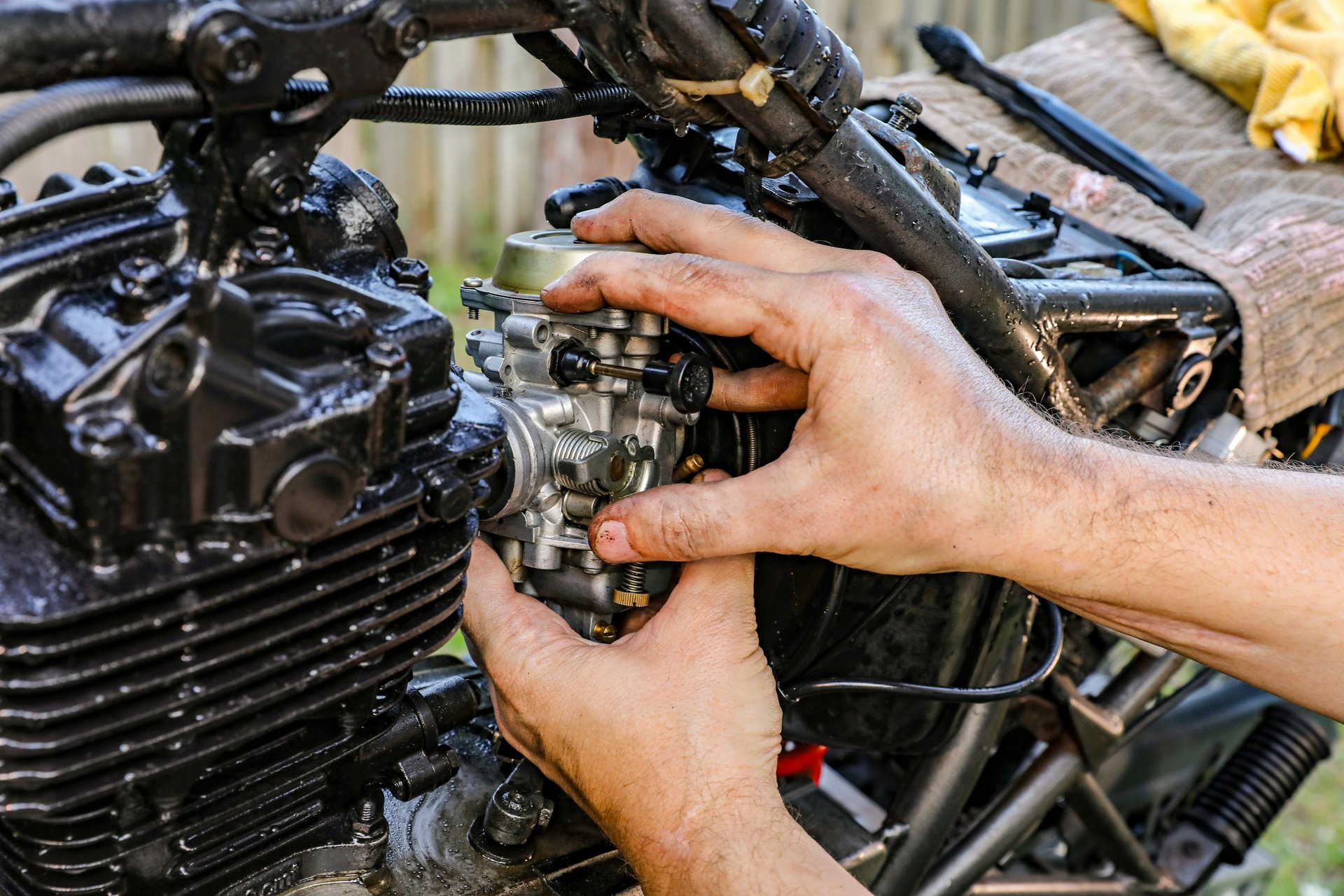
The Motor Makes It Go
If you ride motorcycles, you already understand something most people do not.
A high-performance engine can feel incredible when it is tuned correctly… and miserable when it is not.
The difference is not whether the engine is powerful.
It is whether the systems that support that power are balanced.
The ADHD brain works in a very similar way.
ADHD is not a lack of ability or intelligence.
It is a regulation difference.
Specifically, a difference in the baseline availability of what we call activation fuel.
Across the Ride to Rise framework, activation fuel refers to two key brain chemicals:
Dopamine and norepinephrine
These neurotransmitters regulate readiness, focus, motivation, and the ability to act.
They determine whether the brain can engage smoothly across the entire “rev range” of daily life.
A High-Performance Engine Needs Balance
Think about a two-stroke motorcycle engine.
For it to run cleanly from idle to wide-open throttle, several systems must be in balance:
• The air-fuel mixture
• Jetting and needle position across the rev range
• Oil mixture to reduce friction and heat
• Strong, consistent spark for combustion
• Cooling to prevent overheating
If any of these elements are out of balance, the engine will still run… but not well.
It may idle rough.
Bog under throttle.
Overheat.
Lose power.
Eventually break down.
The problem is not that the engine lacks power.
It is that the system cannot use that power smoothly.
Activation Fuel Is the Brain’s Air and Fuel
In the brain, dopamine and norepinephrine function much like air and gasoline in an engine.
They are not “excitement chemicals.”
They are activation regulators.
They determine whether the system can start, sustain effort, and respond smoothly when demands increase.
When activation fuel is balanced:
The brain idles calmly.
Engagement is available.
When you decide to act, the system responds quickly and smoothly.
But when activation fuel is too low at baseline:
The brain struggles to engage.
Focus becomes unreliable.
Starting tasks feels difficult or impossible.
Performance may be inconsistent across situations.
The engine has power… but cannot access it when needed.
Why the Brain “Bogs” at Low Fuel
Anyone who has ridden a poorly tuned bike knows this feeling.
When the engine idles it is rough, choppy, sputtery.
You roll on the throttle… and nothing happens.
The engine hesitates, sputters, or stalls.
The system simply does not have the right mixture to respond.
In an ADHD-wired brain, something similar can happen.
You can want to do something.
Know it is important.
Even feel pressure to start.
But if baseline activation fuel is too low, the brain cannot release the energy required for action.
This is not laziness.
It is not lack of willpower.
It is a system that does not have enough fuel at idle to respond smoothly.
The “Choke” Strategy: Why Urgency Works
With a poorly tuned engine, riders sometimes compensate by using the choke or revving aggressively to keep it running.
It works… but it is not efficient and it is not healthy for the machine.
The ADHD brain often uses a similar strategy.
When baseline activation fuel is low, the brain compensates and activates the survival system.
Situations that trigger this system include:
• Urgency
• Competition
• Novelty
• Emotional intensity
• Deadlines
• Risk or danger
When these conditions appear, the brain releases a surge of dopamine and norepinephrine along with stress hormones.
This surge acts like dumping extra fuel into the system.
Suddenly:
Focus sharpens
Energy appears
Action becomes possible
Performance may even become exceptional
This is why many people with ADHD perform incredibly well under pressure.
But there is a cost.
Running Hot Damages the System
The survival system does not just increase activation fuel.
It also releases adrenaline and cortisol.
The body tightens.
Heart rate rises.
Sleep quality declines.
Muscles remain tense.
The nervous system stays on alert.
If this becomes the primary way the brain accesses fuel, the system begins running hot all the time.
Over time, this leads to exhaustion, burnout, anxiety, and physical strain.
It is like riding a high-performance engine constantly at redline just to maintain basic function.
Regulation Is Not About Removing Power
Here is the most important insight.
ADHD is not a weak engine.
It is most often a very powerful one.
The challenge is not capacity.
It is regulation.
When activation fuel is restored to a healthy baseline level, something remarkable happens.
The brain begins running clean across the entire range.
You can idle calmly.
Engage when needed.
Shift focus smoothly.
Sustain effort without crisis or pressure.
The survival system no longer needs to carry the load.
How Medication Often Helps
Modern ADHD medications work in a straightforward way.
They increase the baseline availability of dopamine and norepinephrine, the activation fuel.
They do not force motivation.
They do not create artificial personality changes.
They do not push the system into overdrive.
Instead, they raise the idle fuel level so the brain can function normally.
Once that baseline rises:
Initiating tasks becomes easier
Focus becomes more stable
Emotional regulation improves
The nervous system can relax
Performance becomes consistent
Medication does not force the engine to run.
It allows it to run as designed.
A Tuned Engine Feels Effortless
Riders know the feeling of a perfectly tuned bike.
Smooth idle.
Instant throttle response.
Strong pull through the entire rev range.
No fighting the machine.
No drama.
Just clean power.
Many people with ADHD describe regulation in similar terms.
The mental noise quiets.
Starting tasks becomes possible.
Energy becomes steady rather than explosive.
The system flows the resources for sustained output to completion.
Life requires less constant effort just to function.
Understanding the System Changes Everything
When you realize the issue is fuel regulation, not character or capability, many lifelong experiences suddenly make sense.
Why intense environments feel easier to function in.
Why pressure produces bursts of productivity.
Why simple tasks sometimes feel disproportionately hard.
Why exhaustion follows periods of high performance.
These patterns are not personal failures.
They are the predictable result of how the activation system is regulated.
The Goal Is Not Less Intensity. It Is Better Control.
A well-tuned engine is not less powerful.
It is more usable power.
The same is true for the ADHD brain.
With adequate activation fuel and proper regulation, the system does not lose its fire.
It gains control, efficiency, and endurance.
And when that happens, performance becomes available without chaos.
A calm idle.
A responsive throttle.
Power on demand across the entire ride.
GJ Silver — Founder, Ride to Rise Coaching
Intensity Integration Coaching for intensity-driven minds and leaders
Continue Exploring the Ride To Rise Framework - Related Articles
The Engine In Our Helmet
Why Adventure Athletes Struggle With Everyday Life
The Ride-to-Idle Transition
Why High Performers Burn Out
Why ADHD Brains Thrive on Intensity
How the ADHD Brain Engine Works
Harness the Strength of an Intensity-Driven Brain
For many people with ADHD, intense environments unlock focus, clarity, and performance.
Understanding how your brain responds to stimulation can turn what once felt like a weakness into a powerful strength.
Ride to Rise coaching helps individuals understand their intensity system and learn how to regulate it for sustainable focus and performance.
Why some high-performance minds feel impossible to start, unstoppable under pressure, and how restoring activation fuel changes everything
How Motorcycle Engine Tuning and the ADHD Brain Relate
Connect
Reach out to start your transformation journey.
Call
info@ridetorisecoaching.com
+1- 206.383.9429
© 2025. All rights reserved.